High-ticket sales demand precision. When your product or service costs thousands or tens of thousands, aggressive cold calling feels outdated and can undermine credibility. Premium offers require control, authority, and strategic communication.
Decision-makers do not respond well to interruptions. They respond to relevance, timing, and value. Ringless voicemail allows you to reach prospects without forcing your way in, delivering a controlled first impression that is professional and intentional.
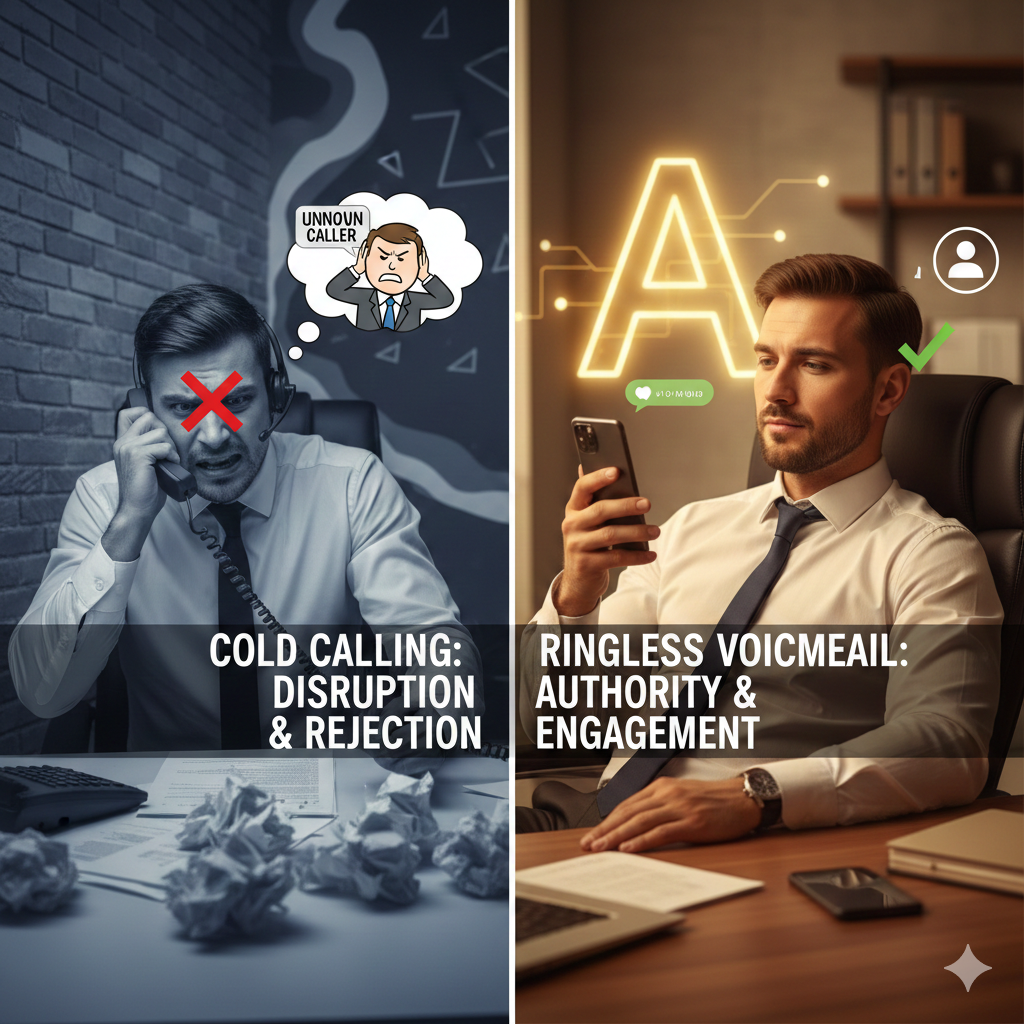
Instead of disrupting executives during meetings, ringless voicemail delivers a carefully crafted message directly into their voicemail inbox. There is no ringing phone, no defensive reaction, and no immediate rejection, just a focused, personalised touchpoint. For businesses selling high-ticket services, this approach changes everything.
Why Cold Calling Fails in High-Ticket Sales
Cold calling relies on volume and chance timing. High-ticket sales, however, are built on trust and strategic positioning.
Executives, founders, and procurement leaders often screen unknown numbers, delegate calls, and avoid interruptions that do not clearly communicate value. When you interrupt someone, you start from a defensive position. Ringless voicemail flips this dynamic. Instead of demanding attention, you earn it, giving prospects the opportunity to engage on their own schedule.
What Makes Ringless Voicemail Ideal for High-Ticket Offers
High-ticket sales require authority, personalisation, multi-touch engagement, and measurable follow-up. Ringless voicemail naturally fits into this structure.
It Creates a Personal First Impression
A well-crafted voicemail feels deliberate and intentional. It demonstrates that research has been conducted and shows an understanding of the prospect’s business and challenges. Compared to generic email outreach, a voice message instantly builds human connection and credibility.
It Respects the Prospect’s Time
Executives value control over their schedule. When they can choose when to listen to your message, receptivity increases. Ringless voicemail allows prospects to engage at their convenience, shifting the interaction from intrusive to inviting.
It Strengthens Multi-Touch Campaigns
High-ticket deals rarely close after a single interaction. Ringless voicemail complements other channels such as email sequences, LinkedIn outreach, and direct calls, creating a cohesive multi-touch strategy. It helps maintain presence and relevance without creating friction or pressure.
How to Structure a High-Ticket Ringless Voicemail
Generic or vague messages rarely convert. High-ticket voicemail requires clear structure and purpose.
Immediate Relevance
Within the first few seconds, establish context. Mention the prospect’s company, industry, recent developments, or a specific challenge. Demonstrating awareness and understanding keeps the listener engaged.
Clear Outcome Positioning
High-ticket buyers focus on outcomes, not features. Position the message around tangible results such as revenue growth, cost reduction, process optimisation, or risk mitigation. Highlight the impact rather than the service itself.
A Low-Pressure Call to Action
Aggressive closing language reduces credibility. A professional, consultative invitation works best. Suggest a follow-up or a brief discussion if the solution aligns with their priorities. This maintains a sense of control and professionalism.
Got it. I’ll expand each section, doubling the content while keeping it natural, professional, and structured for readability. Here’s the rewritten and extended version:
Combining Ringless Voicemail with Data Intelligence
High-ticket sales thrive on measurement and insight. Success in these markets is rarely about guesswork it requires understanding how prospects interact with your messaging and which outreach strategies actually convert. Tracking engagement, callback rates, and overall campaign performance allows you to see which messages resonate most, which times of day or week generate the highest responses, and which segments of your target audience are most receptive.
This data-driven approach transforms voicemail from a one-dimensional broadcast tool into a strategic asset. By analysing the results of each message, you can continually refine scripts, adjust timing, and tailor content to better match the priorities and pain points of high-value prospects. Over time, patterns emerge that reveal not just what works, but why it works, giving your sales team a significant competitive edge. This level of insight ensures that every touchpoint is intentional, relevant, and optimised to drive the highest possible return on effort.
Using AI IVR to Qualify High-Ticket Leads Automatically
When a high-value prospect responds to your outreach, timing is critical. Every moment counts in creating a positive impression and advancing the sales process. AI-powered interactive voice response (IVR) systems can manage incoming calls with speed and intelligence, routing them to the right department, pre-qualifying leads, and capturing key information before a human representative ever picks up the phone.
This automated pre-qualification reduces delays and ensures that your sales team engages only with prospects who meet specific criteria, eliminating wasted time on unqualified leads. AI IVR can gather essential details such as company size, budget range, or decision-making authority, allowing your team to approach each conversation fully informed. By providing prospects with a seamless, efficient experience, you also demonstrate professionalism and respect for their time, which can strengthen initial impressions and increase the likelihood of conversion.
Reducing Sales Friction with Intelligent Call Tracking
High-ticket marketing campaigns often operate across multiple channels, campaigns, and audience segments. Without structured tracking, it is nearly impossible to know which specific efforts drive results and which are underperforming. Intelligent call tracking addresses this challenge by assigning unique numbers to campaigns, geographic regions, or specific messaging variations, providing detailed insight into which strategies are most effective.
With this level of granularity, you can see which audience segments respond best, which messages trigger callbacks, and which sales representatives are most effective at converting interest into closed deals. This precision enables smarter allocation of resources, more effective optimisation of scripts and campaigns, and a higher overall return on investment. Over time, call tracking creates a feedback loop, giving your team actionable data to continuously refine strategy and reduce friction at every stage of the high-ticket sales funnel.

Building Authority Instead of Chasing Prospects
High-ticket sales are not won through persistence alone; they are won through perception. Traditional cold calling often comes across as aggressive or desperate, putting the prospect on the defensive. In contrast, a strategic ringless voicemail campaign communicates authority, competence, and control.
When executed correctly, voicemail allows you to establish credibility from the very first interaction. A concise, personalised message shows that you understand the prospect’s challenges and have a solution worth considering. By controlling the narrative, demonstrating knowledge, and positioning yourself as an authority, you naturally earn attention and respect. Decision-makers respond more positively to this approach than to high-pressure outreach, increasing engagement and improving the quality of subsequent conversations.
The psychological impact of authority cannot be understated. Prospects are more likely to listen, consider, and respond when they perceive that the sender is confident, well-prepared, and intentional, rather than merely chasing a sale.
Implementing a Structured High-Ticket Outreach Framework
A successful high-ticket voicemail strategy begins with a clearly defined target account list and segmentation by role, industry, or company size. Once targets are identified, personalised scripts are crafted to address specific challenges, priorities, or trigger events relevant to each prospect.
Delivery is followed by timely reinforcement through complementary channels, such as email follow-ups or professional social media engagement. Every response is tracked to measure effectiveness, and callbacks are organised and prioritised to ensure the right sales representative engages at the right time. Over multiple campaign cycles, performance data informs adjustments to scripts, messaging, and targeting, transforming voicemail from a simple communication tool into a repeatable, scalable acquisition system.
This structured framework ensures that each touchpoint is part of a coherent strategy, maximising both efficiency and conversion potential. It allows high-ticket sales teams to focus on meaningful interactions rather than reactive, uncoordinated outreach.
Why This Strategy Works in Competitive Markets
In competitive industries, most companies rely on predictable and oversaturated channels such as email, automated LinkedIn messaging, and traditional cold calls. Few invest in leveraging voicemail strategically, and even fewer execute it professionally. This creates a unique opportunity for businesses that can differentiate their approach without being intrusive.
Delivering controlled, personalised messages allows you to stand out in crowded markets while maintaining professionalism. Prospects notice when outreach is deliberate rather than random, and they respond differently when they feel respected and understood. By combining timing, messaging, and relevance, high-ticket sales teams can achieve better engagement, higher response rates, and stronger positioning compared to competitors who rely on conventional methods alone.
Where Ringless Voicemail Delivers the Greatest Impact
Ringless voicemail is particularly effective for industries where a single closed deal can justify the investment of an entire campaign. This includes B2B consulting, SaaS platforms, financial advisory services, marketing agencies, commercial real estate, and enterprise solution providers.
In these contexts, strategic voicemail allows your team to maintain consistent visibility with high-value prospects, convey expertise, and initiate meaningful conversations without overburdening the prospect. By positioning your message as a respectful and professional touchpoint, you increase the likelihood that decision-makers will engage, even in industries where gatekeeping and competition are intense.
Turning Interest Into Qualified Meetings
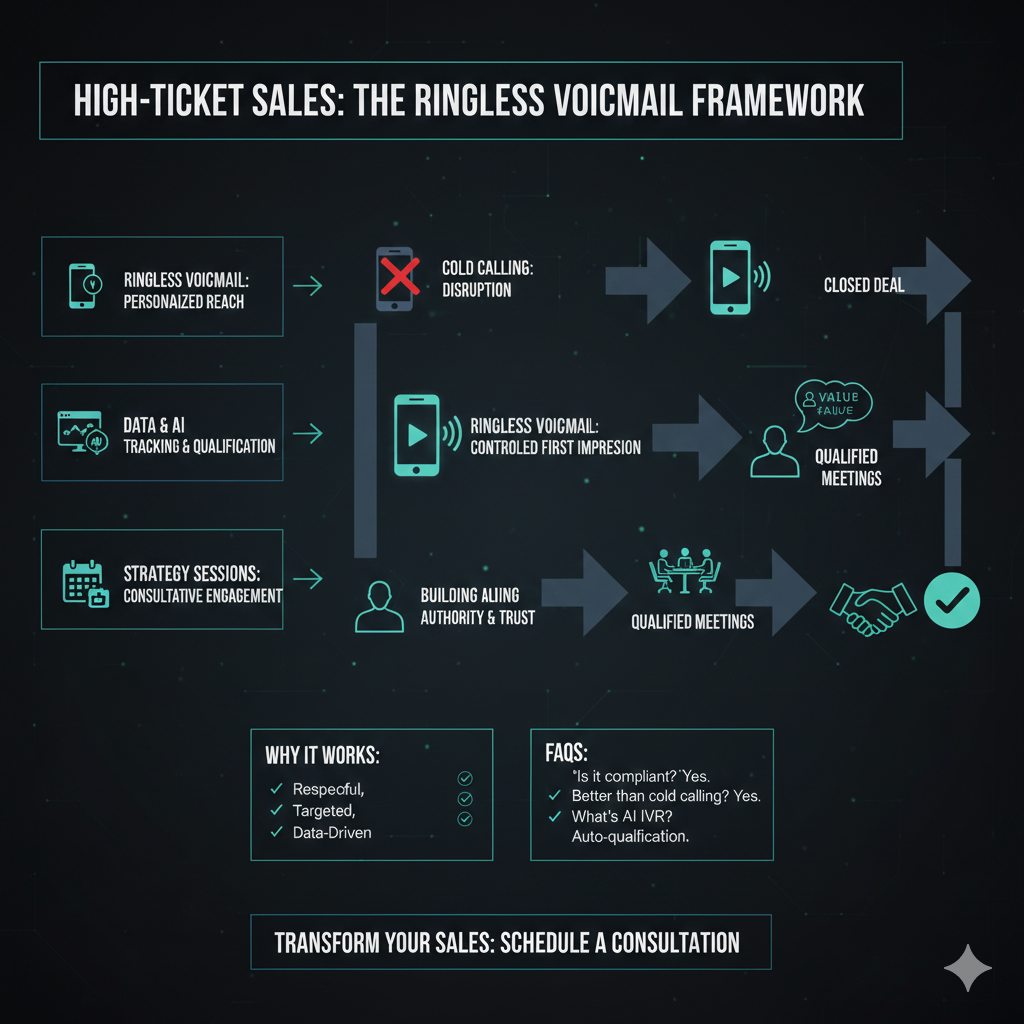
High-ticket campaigns succeed when outreach, tracking, and follow-up systems are aligned. Ringless voicemail initiates engagement, providing a controlled first impression. Data-driven tracking measures which messages and segments generate responses. Automated systems pre-qualify leads, ensuring your sales team engages only with qualified prospects. Analytics then refine the approach, identifying opportunities to improve scripts, timing, and targeting.
When implemented effectively, this creates a self-improving acquisition system. Interest is consistently converted into qualified meetings, follow-up is precise, and campaigns become increasingly efficient over time. This systematic approach transforms voicemail from a simple outreach tactic into a scalable, high-impact tool for high-ticket sales.
FAQs
Is ringless voicemail compliant for high-ticket B2B outreach?
Compliance depends on jurisdiction and targeting method. When used responsibly and in accordance with applicable communication laws, ringless voicemail can be deployed for B2B outreach. It is essential to follow consent requirements, maintain clear opt-out mechanisms, and ensure your campaigns align with current regulations.
Does ringless voicemail work better than cold calling for enterprise sales?
In many cases, yes. Ringless voicemail avoids interruption, creates a controlled first impression, and allows executives to engage on their own time. It also integrates more naturally into multi-touch campaigns compared to traditional cold calling, which often triggers resistance immediately.
How long should a high-ticket voicemail message be?
Typically between 20 to 45 seconds. The message should be concise, relevant, and outcome-focused. High-ticket buyers value clarity and precision, so avoid long explanations and focus on value positioning.
Can I track which voicemails lead to closed deals?
Yes. By integrating with Call Analytics and Call Tracking, you can attribute callbacks, booked meetings, and even closed revenue to specific voicemail campaigns. This allows you to refine scripts and optimise targeting over time.
How does AI IVR improve high-ticket sales workflows?
AI Interactive Voice Response can qualify incoming calls, intelligently route prospects to the appropriate team, and collect preliminary data before a sales representative engages. This ensures high-value leads are handled efficiently and professionally.
Is ringless voicemail scalable for enterprise outreach?
Yes. With proper segmentation, tracking, and analytics integration, ringless voicemail can scale across industries, territories, and account-based campaigns while maintaining personalisation. When structured correctly, it becomes a repeatable acquisition system rather than a one-off tactic.
Ready to Close High-Ticket Deals Without Cold Calling?
Stop chasing prospects with interruptive outreach and start engaging them with precision. Ringless voicemail gives you a controlled, professional way to reach decision-makers, build authority, and turn interest into qualified meetings.
Combine strategic messaging with intelligent tracking and automation to create a scalable, data-driven acquisition system built for high-value sales.Take the next step today. Contact us to schedule a consultation and see how ringless voicemail can transform your high-ticket sales strategy.